Mister Josh's Neighborhood

Project Prospectus
To create access to violin lessons and deeper music education via YouTube and an affordable paid subscription service for students who do not have financial means or the ability to commit weekly to the private lesson environment.
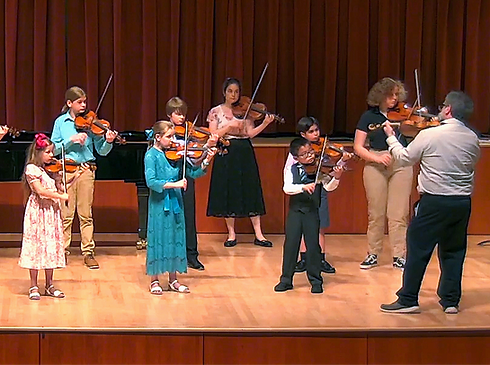
Who I Am:
After years of experience as a Suzuki Violin teacher, I have gained a perspective on teaching that is designed for simplistic modularity. I have spent the last ten years developing a progression of teaching that is step by step, orderly violin pedagogy that has been developed and proven for success.
It is the goal of my project to develop a YouTube channel that is designed around an edutainment sketch comedy show that serves music education in the same manner as famous television education shows such as Mister Rodger’s Neighborhood, Bob Ross, Picture Pages and many more.
A Hybrid Project Management Style
My project plan is to use a hybrid style of Project Management to combine the traditional ADDIE style of curriculum development to generate overarching (seasons or semester plans) for goal setting. Inside of the overarching framework of the ADDIE system, then to use agile Project Management Styles to integrate the SAM method of curriculum development to generate modules which create and adapt the path to reach overarching ADDIE goals. (Omoregie et al., 2025)
Each pedagogical development system presents strengths and weaknesses for course development. ADDIE is very traditional in its design approach and uses a traditional project management style to outline course formation and design feedback and evaluation models. SAM presents an agile approach that develops as it proceeds, can be built quickly in an iterative manner but can also become shallow in its capability to present material for depth as its focus is based on agility to create content at the expense of providing the depth and detail. Its focus is speed and agility. The Dick and Carey Model is systematic and provides opportunity for measurable and specific outcomes and evaluative feedback.
To provide the highest level of asynchronous instruction, it is also highly beneficial to integrate a feedback system of educational evaluation from the Dick and Carrie Model of pedagogical development to create a community that provides peer and professional evaluation for the purpose keeping the instruction high quality in an asynchronous environment for a form of study that has typically been presented in person or at least live.
It is in this way that I am using a divergent method of problem solving that integrates the qualities of three curriculum pedagogy development methods. Utilizing the strengths of each of these curriculum creation and Project Management models to utilize the convenience of being able to start at the end goal and to create content on-the-go. Development can happen in real time, diverting from the path while keeping the direction moving toward an end goal. This process affords the ability to provide adequate feedback in a peer-reviewed community, generating the necessary feedback for progress from a like-minded community.

Who You Are:
The primary intended users of the content that I am creating are middle school and high school students who are playing instruments for the first time in their school orchestra music programs and who do not have access to the benefits of depth that is gained from individual instruction which is offered from within the private lesson environment.
The secondary audience I plan to reach is the adult beginner who is typically inundated with adult responsibilities and has an incapacity to commit to weekly lessons, but who could take advantage of an asynchronous learning environment to learn to practice and capture new skills. Several students in this market are often former school orchestra musicians and are interested in getting back into it as a hobby for enrichment.
How We Do What We Do:
Method of Creation
Each session should be formatted from a launch point of an overarching goal. For example, the curriculum should be based on a number of weeks format in which the course objectives are outlined. These could be as simple as learning all twelve major scales to learning to play a piece of music of several optional levels of musical and technical difficulty. The story is launched from the perspective of Mr. Josh being the teacher, and the student being the hero of their own story of progress and success as referenced in “Building a Story Brand”, by Donald Miller. Modules will be presented beginning with the development of an initial infographic which is used to generate quick absorption and adaptation to concepts that will be presented. The infographic will contain all of the broken-down lesson plans to obtain the capability to achieve the overarching goal. Being able to achieve each of these modular goals will provide the hero with the capability to succeed. Along the way, each module will contain elemental points of educational value while providing entertaining perspectives to generate and inspire continued interest. For example, we may be discussing a rhythmic breakdown in the music in one short segment of the module video, and quickly jump to a performance of the piece of music in a concert hall, or an interview with a famous or not so famous local musician who can provide some clarity and inspiration toward the difficult task of making a technique work or a philosophical presentation on the art of self-motivation. The goal is to combine the difficult elements of the educational and performative aspects of achieving success on a very difficult instrument while enchanting the audience to continue to participate through the use of edutainment and entertaining content that inspires, creates comedy, and tells a story of how a student, our main character, can achieve their very difficult goal of playing the violin. Step-by-step education and entertainment presented asynchronously with infographics to users of many different cultures, backgrounds and levels of understanding.
Something for Everyone
It is the intent to provide ease of use through the use of the common digital literacies of YouTube and TikTok presentation. In this manner, the level of digital literacy entry presents very little stumbling blocks of technical know-how. This simplicity of presentation is essential because adding an element of technological difficulty to the already overwhelming sense of difficulty presented by the playing of the instrument can so easily create just enough frustration to put the whole project down from the start. This curriculum presentation is intended to be able to reach technologically savvy Gen-Alpha students and to be accessible to the technologically challenged baby-boomers who are still around and in retirement hobby years. Being digital and asynchronous affords usage on the global scale, inviting users in from around the world. In Conclusion To find success at this juncture in the time frame presented in the class, I hope to be able to create one or two SAM modeled lesson plans that stem from one overarching ADDIE goal. After creating the plan, I intend to build the infographics for one or two modules, develop one or two modular video scripts that lead to the completion of the video presentation. The examples provided for the class project will serve as prototypes that will propel Mr. Josh’s Neighborhood into development beyond graduation and into release for the Mr. Josh’s Neighborhood YouTube Channel, Sales and Marketing for long-term agile development serving the defined needs of students around the globe.